
When you spend a lot of money on a boat, it’s important to know if you’re getting your money’s worth. One of the most important things to consider is how reliable the boat’s engine is going to be. If you’ve found a boat that fits your needs and your budget, the next step is to make sure the engine is in great shape and up to the task of powering your boat.
To make sure the boat you’re looking at is a good fit, it’s important to know if the boat has a few dents and scratches or if the engine has more wear and tear than what’s listed in the description.
If you’re thinking of upgrading your boat, a new engine can cost a pretty penny and it’s important to know what kind of fuel flow you’re paying for.
To help you find the right engine for your needs, we’ve rounded up the best boat engine fuel flow instruments to help you determine if your engine is running efficiently.
Read on for the best boat engine fuel flow instruments on the market and how to choose the one that’s right for you.
Our Editor’s Best Boat Engine Fuel Flow Instruments Reviews

- Includes Attwood award-winning sprayless Connector; no more dangerous fuel sprays when connecting and Disconnecting pressurized lines
- Multi-layer low-permeation primer bulb with 60% more fuel output compared to competitors
- Includes 3/8-Inch low-permeation fuel hose that resists kinking and hardening; rated up to 100 degrees centigrade
- Versatile: Compatible with ethanol blended fuels, Mercury brand engines and tanks
- Attwood develops high value, engineered marine products to make life on the water easier to enjoy

- Includes Attwood’s award-winning Universal Sprayless Connector; no more dangerous fuel sprays when connecting and disconnecting pressurized lines
- Multi-layer low-permeation primer bulb with 60% more fuel output compared to competitors
- Includes 3/8-inch low-permeation fuel hose that resists kinking and hardening; rated up to 100 degrees Centigrade
- Versatile: compatible with Ethanol blended fuels, Johnson/Evinrude Brand engines and tanks
- Attwood products are both compatible and reliable, engineered and built with a never-fail attitude
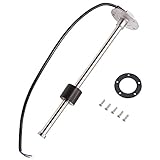
- 100TECH Stainless Steel Fule Tank Sending Unit is Made With OKI Reed Switch(Imported from Japan). It is the Direct Replacement for Arm Type sender. The Advantage of This Fuel Level Sender Over Thick-Film Swim Arm Type Level Sender is the Reed Switch's Durability and Reliability.
Additionally, No Moving Parts to Break. No Adjustment Needed for Tank. - The Fule/Water Level Sensor with American standard output 240-33 ohms (240 ohms at empty, 33 ohms at full). If you Need Lengths Other than 4"-32", Please Contact us Directly for More Information.
- [Easy to Install] The Fuel Level Sending Unit Comes with Gasket,Mounting Screws,Well-Written and Illustrated instructions; The Wiring Instructions are Straight Forward and Easy to follow.
- SAE 5 hole Mounting Pattern, Heavy Duty 316 Stainless Steel and Rugged Construction. Wide Application: It Could Support Fuel Level Gauge and Water Level Gauge for Boat/Auto.
- 100Tech Guarantees with 1 Year Limited Warranty & Free Lifetime Technical Support
Attention: To Allow the Fule Sender not Hit the Bottom of the Tank, Please Measure from the Top of Your Tank to the Bottom on the Outside and Subtract 1 Inch the Length of Sender.

- SIGNAL OUTPUT: Standard American Output, 240 ohm - 30 ohm (Empty - Full), Non-Linear Output, 18-21mm Per Step
- MOUNTING METHOD: SAE 5 Hole Mounting Pattern ( NOT equidistant )
- OPERATING: 12V/24V, -40° F to + 185° F (-40° C to +85° C)
- INCLUDED: Sending Unit (1 pc), NBR Mounting Gasket (1 pc), 10-24 Hex Screws (5 pcs), Installation Instruction (1 pc)
- FOR USE IN: Diesel, Fuel, Gasoline, Water, OEM Replacement.

- Mates to Attwood Part Number 8883-6
- Specifically designed for use with Johnson/Evinrude/OMC Brand engines and tanks
- Easy installation with barbed fittings for 3/8 inch I.D. (interior diameter) hose (purchase hose clamps separately)
- Extremely versatile; designed for leaded, unleaded, and alcohol-blended fuel
- Made of durable Acetal for dependable performance and peace of mind

- Durable die-cast zinc for long-lasting performance
- Versatile; for use with leaded, unleaded, Ethanol-blended, and alcohol-blended fuels
- Standard 1/4 inch NPT thread with barbed fittings for 3/8 inch I.D. (inside diameter) hose
- Specifically designed for Mercury/Mariner Brand engines and tanks
- Attwood products are both compatible and reliable, engineered and built with a never-fail attitude

- All swingarm readings are subject to fuel-slosh fluctuations
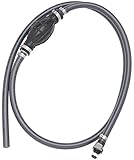
- Includes Attwood’s award-winning Universal Sprayless Connector; no more dangerous fuel sprays when connecting and disconnecting pressurized lines
- Multi-layer low-permeation primer bulb with 60% more fuel output compared to competitors
- Includes 3/8-inch low-permeation fuel hose that resists kinking and hardening; rated up to 100 degrees Centigrade
- Versatile: compatible with Ethanol blended fuels, Universal Brand engines and tanks
- Attwood products are both compatible and reliable, engineered and built with a never-fail attitude

- [Adjustable and Wide Application]100TECH Fuel Level Gauge is Designed to Measure & Display the Amount of gas or Fuel in Your Boat or Vehicle's Gas Tank. Signal Input : 0-190ohm, 240-33ohm, 240-30ohm, 0-180ohm, 10-180ohm.
- [A Fine Replacement Fuel Guage] The Needle is Smooth Sweeping and Surpasses the Original Version in the Boat(the Needle doesn't Bounce all over the Place as the Boat is Underway or in Rough Sea Conditions).
- [7 Color Adjustment Cycle Modes] Includes Red(Default), Green, Blue, White, Yellow, Yellow Green, Orange, Purple Allow You to Match Your Factory Dashboard Lights or Add a Custom Style to the Interior of Your Vehicle.
- [Easy to install and Calibrate] Install diameter: Φ52mm or 2-1/16'', Indication range: E~F, Working voltage: 9-32v dc [ fit 12V-24V Vehicle or Engine] The instruction is Easy
- [Body Material]IP67 waterproof and Dustproof grade,316 Stainless Steel Bezel100TECH Guarantees with 1 Year Limited Warranty & Free Lifetime Technical Support
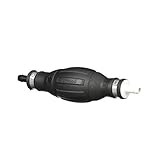
- ALCOHOL‑RESISTANT PRIMER BULB: Compatible with both leaded and non‑leaded fuels—including ethanol blends—ensuring versatile, reliable fuel priming without degradation
- INTERNATIONAL MODEL, EASY REPLACEMENT: Designed for 3/8″ ID fuel lines, this bulb (not for use in the U.S.A.) is a drop‑in replacement—fast, straightforward installation keeps your boat ready for action
- INTEGRATED BARB END CONNECTORS WITH STAINLESS CLAMPS: Provides secure, leak‑proof connections to 3/8″ fuel hoses, simplifying installation and maintenance without extra parts
- DURABLE, NON‑CORROSIVE CONSTRUCTION: Built with galvanized clamps and rugged materials, offering long-term resistance to saltwater corrosion and harsh marine conditions
- DOUBLE CHECK‑VALVE SYSTEM: Guarantees correct fuel flow direction and efficient priming under any orientation, preventing backflow and ensuring reliable startup every time
Best Boat Engine Fuel Flow Instruments Buying Guide
Before choosing the best boat engine fuel flow you should consider following options:
1. Measuring Units: Before you buy an engine fuel flow gauge, you need to make sure that it is compatible with the kind of fuel your boat uses. Fuel flow gauges come in different measuring units such as liters per hour, gallons per hour, cubic meters per hour, and pounds per hour.
2. Accuracy and Precision: The accuracy and precision of your fuel flow gauge will depend on the kind of technology used to measure the flow. The type of technology used will depend on the type of fuel that the boat uses.
For instance, if you are using a liquid fuel such as diesel or gasoline, then you will need a fuel flow meter that measures volumetric flow.
On the other hand, if your boat uses an oil-based fuel, then you will need a fuel flow meter that measures mass flow.
The fuel flow gauge you buy should have an accuracy of within 5 percent of the actual flow.
The precision of a fuel flow gauge should be within 0.1 percent of the actual flow.
3. Cost: Fuel flow gauges are available at different prices depending on the technology used. The accuracy and precision of the fuel flow gauge will determine its price.
For instance, if you are using a fuel flow meter that measures volumetric flow, then it will be relatively cheaper than a fuel flow meter that measures mass flow.
If you are using a liquid fuel, then you will have a wider choice of fuel flow gauges.
What else you should know about boat engine fuel flow instruments
1. What are the most common types of boat engine fuel flow instruments?
The most common types of boat engine fuel flow instruments are fuel gauges and fuel flow meters.
2. How do these instruments work?
The wind instruments work by the player blowing into a mouthpiece, which then vibrates the air inside the instrument. This vibration then creates the sound that we hear.
3. What are the benefits of using a boat engine fuel flow instrument?
A boat engine fuel flow instrument can help ensure that an engine is receiving the correct amount of fuel. This can help prevent engine damage and improve fuel efficiency.
4. How do you choose the right fuel flow instrument for your boat engine?
The size and type of boat engine will dictate the size and type of fuel flow instrument required.
5. How do you properly install and maintain your boat engine fuel flow instrument?
There are a few things you need to do to properly install and maintain your boat engine fuel flow instrument. First, you need to make sure that the sensor is properly installed in the fuel line. Next, you need to calibrate the instrument according to the manufacturer’s instructions. Finally, you need to regularly check the instrument for accuracy and clean it if necessary.
Conclusion
On the market, there are numerous best boat engine fuel flow instruments. Hopefully, the list of the top ten best boat engine fuel flow instruments will save you time researching and deciding on the best one for you.