
Just as there are a variety of materials used to make fabrics, there’s a wide range of fibers and yarns used to produce them. Some fabrics are described as luxurious, while others are durable and strong. Some fabrics are soft and smooth, while others are rugged and heavy-duty. The qualities of a fabric are largely determined by the type of fiber it’s made from. For example, if you want a T-shirt that feels soft and luxurious against your skin, you probably want it to be made from cotton. If you want a heavy-duty canvas apron that’s going to stand up to all sorts of abuse, you’re looking for a fabric made from durable canvas. To help you find the right fabrics for your projects and make sure you’re making them out of the right materials, here’s a list of the best fabrics fibers and materials.
Read on to learn more about the best fabrics fibers, including the materials you should use for different sewing and knitting projects.

Our Editor’s Best Fabrics Fibers Textiles Raw Materials Reviews

- Natural Rattan material: Our cane webbing is made from 100% natural rattan material, which retains its rich, warm hue and does not use artificial dyes, ensuring lasting beauty that does not fade over time
- Perfect for DIY Projects: Whether you're refurbishing furniture, crafting home decor, or creating intricate designs, this cane webbing roll is easy to cut, shape, and customize for endless creative possibilities
- Flexible and Easy to Use: Soft yet sturdy, this natural rattan fabric can be bent and shaped to fit various projects without losing its integrity, making it ideal for both beginners and experienced crafters
- Easy to Maintain for Lasting Beauty:Ensure your rattan webbing stays in top condition by soaking it in warm water for 30 minutes before use. To maintain its flexibility and durability, simply clean it periodically with a mild saltwater solution to preserve its natural beauty and longevity
- Generous Dimensions for Customization:Each rattan webbing roll is 24 inches wide by 60 inches long (5 feet), offering ample material for various projects. Easily cut to the desired size or shape with scissors to suit your specific needs—whether you're crafting decorative panels, weaving intricate designs, or adding unique touches to your furniture

- Size Reference-- You will receive a roll of aramid woven fabric measuring 1 m/1.1 yard in length, 1 m/39.3 inch in width, and 0.4 mm in thickness, those are sufficient for your daily use
- Quality Material-- This square fiber fabric is made of quality fiber material, its surface is yellow and has excellent durability and protective performance
- Wide Usage-- Suitable for wrapping complex structures, commonly used in thermal insulation, protective clothing, expansion joints, hose or pipe wrapping, transmission belts, and cable protection
- Practical Design-- Aramid woven fiber fabric can be folded for storage and is easy to carry, making it an ideal choice for safety equipment and industrial applications
- Bright yellow-- This fabric is a vibrant yellow that not only enhances visibility but also makes it easier to identify and use in a variety of environments

- With unidirectional fabric there are no gaps between fibers and those fibers lay flat. There is no cross-section weave that divides the fiber strength in half with another direction. This allows for a concentrated density of fibers that provide maximum longitudinal tensile potential. This directional strength property makes it an isotropic material, similar to wood.
- Unidirectional fabrics are not appropriate for parts that require a great anisotropic strength (strength in all directions). Although during layup of a part, the unidirectional fabrics can be overlapped at varying angle orientations to achieve strength in multiple directions without sacrificing stiffness.
- ZERO is a patented non-woven unidirectional fabric with a relatively small percentage of binder material (less than 3%). The binder is applied to only one side of the fabric resulting in virtually no crimp in the reinforcement fibers.

- Temperature Resistant, Cut Resistant, Flame Resistant, Heat-Insulation, Non-Conducting, Anti Pill, Sustainable, Abrasion-Resistant, Breathable, Tear-Resistant, Anti-Pull.
- High Strength Para Aramid Woven Fabric - 400GSM / 3000D
- Yellow color. 36 inch width. Length by the yard (choose your qty and you will receive continuous yardage).
- Approx. 0.7mm thickness.
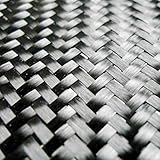
- Woven Carbon Fabric: 2x2 Twill Weave that conforms easier to parts than plain weave.
- High Quality 3K Cloth: A 3K fiber fabric has 3000 filaments in each tow or bundle. The bundles are woven together to form the fabric, which makes it so strong, yet lightweight.
- One of the Most Popular Fabrics: Mostly used for cosmetic purposes when looking for the classic carbon fiber look. Commonly used in the automobile, sporting goods, and aerospace industry.
- Use with Epoxy Resin: Carbon fiber fabric can be used for creating great looking car hoods, dashboards, modeling, aircraft, and more. Apply epoxy resin to add a glossy clear coat on top of it.
- Dimensions: 5.7oz, 50 inch width x 10 yards (30 ft) length. Made in the USA.

- Durable & Reliable: Made with high-quality linen fabric backed with sturdy paper, this book cloth for book binding is built to last through countless crafting sessions without fraying or tearing (Please note: Depending on the fabric color and its light transparency, the backing may be white or black. Rest assured, this won’t affect how you use or enjoy the product.)
- Perfectly Sized: Each sheet comes pre-cut to 14 x 10 inches—just the right size for most bookbinding, scrapbooking, or DIY cover projects, saving you time and effort.
- 6 Elegant Colors: book binding materials Includes 12 sheets book cover—2 of each color—so you can mix and match shades to create stylish, personalized designs that truly stand out.
- Easy to Work With: No need to peel or prep—just apply your adhesive of choice directly onto the paper backing and attach. Simple, clean, and frustration-free.
- For All Your Crafting Needs: Whether you're designing custom book covers, photo albums, or decorative gift boxes, the soft linen texture adds a refined touch to every creation.

- Uni Carbon Fiber – This sleek black fabric by Fibre Glast delivers max one-way impact resistance, high strength and professional cosmetics. Use our non-woven crimp-free cloth with epoxy resin for marine, aerospace, auto racing parts or sports gear. 12” x 36”.
- Durable Performance – At 700 KSI, this fabric is 6x stronger than steel. Fabricate ultra-lightweight precision parts with single direction strength. Drone aircraft, watercraft models, hiking or hockey sticks, aerospace pressure vessels and more.
- First Quality Certified – We only sell fabrics that are certified for the most demanding applications, from marine craft to space craft. "First Quality" means there will be no flaw or difference in product, from one order or batch to the next.
- How To Use – Follow our guided instructions or use your own expertise to apply this carbon twill weave to your repair, build, tool or part. Stealth black graphite mat is a great alternative to fiberglass roving, mesh cloth or tape in many fabrications.
- The Fibre Glast Difference – We're proud to be the trusted supplier of governments, contractors and big brands like the US Olympic Luge Team, and we look forward to earning your trust as well.

- Nice Size for Versatile Usage: you will receive 1 roll of Aramid fiber synthetic fiber With a size of approximately 18.11 x 35.83 inches/ 46 x 91 cm and a thickness of around 0.03 inches/0.84 mm, it can meet a wide range of needs; Whether you're in the automotive, mining, or aerospace and defense industries, it offers ample coverage for wrapping complex structures.Note: Due to the cutting process, the product edges are rough and easily ignited, but its flame retardant effect is not affected
- Enhancing Specifications: the fabric cloth weighs 480g, is mechanically woven using short fiber yarn with a twill weave; It can be applied directly or with other fiber types in laminates to produce parts with significantly improved impact resistance; For good results, pair it with epoxy resin and Aramid reinforcement materials
- Good Mechanical Performance: this heavy weight fabric cloth has the flexibility of finished fabric; Its twill weave provides bidirectional strength, distributes stress evenly, and prevents bending; With a carbonization temperature of 482℃ and a long term usage temperature between -196℃ and 330℃, it exhibits excellent tensile strength and tear elongation
- Stable Performance: aramid fiber synthetic fiber is made of 100% aramid, which is not affected by harsh environments; It is flame retardant, wear-resistant, cut-resistant, aging-resistant, and corrosion-resistant; It will change color after being exposed to ultraviolet rays or artificial light for a long time, but it has no effect on product performance and has a long service life
- Broad Applications: this 100% fabric cloth is widely applied for wrapping complex structures and is commonly used in thermal insulation, security clothing, expansion joints, fireworks, hose or pipe wrapping, transmission belts and cable protection, offering value and stability for a broad range of industries

- Cotton Spandex Jersey Fabric Width: 58/60" Inches; Weight: Around 10oz/200 gsm; Different colors and lengths by the yard and continuous yards are available
- Due to its low heat retention abilities, It makes a good choice for summer apparel. Our cotton spandex fabric is a very soft, breathable, lightweight, and slightly different feel and wear. The stretch fabric is suitable for garments that you wear close to your skin such as t-shirts, tops, skirts, leggings, etc
Best Fabrics Fibers Textiles Raw Materials Buying Guide
1. Cotton: It is one of the most widely used fibers in the world. Cotton is obtained from the cotton plant. Cotton is mainly used for the production of bed sheets, towels, shirts, T-shirts, dresses, and many other products.
2. Linen: This material is commonly used for the production of bed sheets and clothing. Linen is mainly obtained from the flax plant. It can also be obtained from other plants such as jute and hemp.
3. Jute: This material is mainly used for the production of ropes, bags, and sacks. It is obtained from the plant of the same name.
4. Hemp: Hemp is mainly used in the production of ropes, fabrics, and other products. It is mainly obtained from the hemp plant.
5. Nylon: This material is mainly used in the production of bags, carpets, and other products. It is mainly obtained from the compound of the same name.
6. Polyester: Polyester is mainly used in the production of carpets, bags, and many other products. It is mainly obtained from the compound of the same name.
7. Rayon: Rayon is mainly used in the production of shirts, bed sheets, and many other products. It is mainly obtained from the compound of the same name.
8. Spandex: This material is mainly used in the production of leggings, bodysuits, and many other products. It is mainly obtained from the compound of the same name.
9. Wool: Wool is mainly obtained from the wool of different animals such as sheep, angora goat, llama, alpaca, camel, and others. It is mainly used in the production of sweaters, t-shirts, suits, coat, hats, socks, blankets, carpets, and many other products.
10. Cashmere: This material is mainly obtained from the cashmere goat. It is mainly used in the production of sweaters.
11. Synthetic fibers: Synthetic fibers are mainly obtained from chemical compounds. They are mainly used in the production of carpets, raincoats, bags, socks, and many other products. Some of the most commonly used synthetic fibers include:
Nylon
Polyester
Acetate
Polypropylene
Acrylic
Polyethylene
Saran
Polyvinyl chloride
Olefin
Para rubber
NTP
PVC
Polytetrafluoroethylene
Viton
12. Specialty fibers: Specialty fibers are mainly used in the production of special products. They are mainly obtained from special plants. Some of the most commonly used specialty fibers include:
Cashmere
Bamboo
Synthetic silk
Silk
Wool
Linen
Alpaca
Cashmere
New wool
Mohair
Angora
Llama
Worsted wool
What else you should know about fabrics fibers textiles raw materials
1. What are the most common types of fabrics fibers?
The most common types of fabric fibers are cotton, linen, wool, and silk.
2. What are the properties of different types of fabric fibers?
Different types of fabric fibers have different properties. For example, cotton fibers are soft and absorbent, while polyester fibers are strong and wrinkle-resistant.
3. How are fabrics and textiles made?
Different fabrics and textiles are made in different ways, but there are some common methods. Many fabrics, especially natural fibers like cotton, linen, and wool, are made by spinning the fibers into yarn, which is then woven or knitted into fabric. Other fabrics, like polyester, are made by melting the raw material and extruding it into long fibers, which are then spun into yarn and woven or knitted into fabric.
4. What are the raw materials used to make fabrics and textiles?
The raw materials used to make fabrics and textiles are typically natural fibers like cotton, wool, and silk, or synthetic fibers like polyester and nylon.
5. How do fabric fibers affect the quality of fabrics and textiles?
Fabric fibers affect the quality of fabrics and textiles in a few ways. The type of fiber used will affect how the fabric looks, feels, and how well it wears over time. Natural fibers like cotton and linen are usually softer and more breathable than synthetic fibers like polyester and nylon. However, synthetic fibers are often more durable and less likely to wrinkle.
Conclusion
On the market, there are numerous best fabrics fibers textiles raw materials. Hopefully, the list of the top ten best fabrics fibers textiles raw materials will save you time researching and deciding on the best one for you.