
This list comprises a variety of our favorite early childhood education materials, from classic children’s books to engaging toys, all of which are known for instilling a sense of wonder and curiosity in even the youngest children.
Read on for our favorite early childhood education materials.
Our Editor’s Best Early Childhood Education Materials Reviews

- PHONEMIC AWARENESS ACTIVITIES: With its comprehensive, spiraled scope and sequence, Guided Phonics + Beyond facilitates an effective, research‑based approach to phonics instruction.
- SMALL GROUP CLASSROOM MUST HAVES: Each two‑part lesson is flexible and can be taught across whole group or small group time. The scripted lesson structure embeds everything a teacher needs to follow the best‑practices of Science of Reading.
- CLASSROOM SUPPLIES FOR TEACHERS ELEMENTARY: Unit 2 features 25 two-part lessons focusing on CVC Words. Tara West has been involved in education for 15 years, serving as an early childhood educator, a curriculum writer, and a professional development speaker.
- PRESCHOOL LESSON PLANS: Tara believes in the importance of creating instructional materials and resources that are fun and engaging to students and supporting the teachers who use her materials.
- DEVELOPED BY TARA WEST: Unit 2: CVC Words Instructional Materials includes a spiral‑bound Teacher Guide and the Word and Phrase cards needed for each lesson.

- Early Childhood Education Materials
- Includes 28 B00KS in a Bus
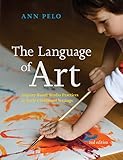
- Pelo, Ann (Author)
- English (Publication Language)
- 288 Pages - 11/08/2016 (Publication Date) - Redleaf Press (Publisher)

- Zone, School (Author)
- English (Publication Language)
- 64 Pages - 06/05/2019 (Publication Date) - School Zone (Publisher)

- PHONEMIC AWARENESS ACTIVITIES: With its comprehensive, spiraled scope and sequence, Guided Phonics + Beyond facilitates an effective, research‑based approach to phonics instruction.
- SMALL GROUP CLASSROOM MUST HAVES: Each two‑part lesson is flexible and can be taught across whole group or small group time. The scripted lesson structure embeds everything a teacher needs to follow the best‑practices of Science of Reading.
- CLASSROOM SUPPLIES FOR TEACHERS ELEMENTARY: Unit 3 features 25 two-part lessons focusing on Digraphs & Beginning Sounds. Tara West has been involved in education for 15 years, serving as an early childhood educator, a curriculum writer, and a professional development speaker.
- PRESCHOOL LESSON PLANS: Tara believes in the importance of creating instructional materials and resources that are fun and engaging to students and supporting the teachers who use her materials.
- DEVELOPED BY TARA WEST: Unit 3: Digraphs & Beginning Blends Instructional Materials includes a spiral‑bound Teacher Guide and the Word and Phrase cards needed for each lesson.

- Interactive Learning Experience:Engage children with colorful magnetic fraction tiles and circles that easily attach to whiteboards and other surfaces, making fractions visual, hands-on, and fun to explore.
- Safe & Durable Materials:Crafted from eco-friendly paper and sturdy basswood plywood, each piece is smooth, non-toxic, and built to withstand repeated classroom or home use while ensuring safe play for kids.
- Hands-On Math Practice:Students can match tiles to shaded sections, build equations, and explore fraction relationships through interactive play, reinforcing mathematical concepts and critical thinking skills.
- Perfect for School & Home:Ideal for elementary classrooms, homeschooling, or early math enrichment at home. This versatile set adapts to various teaching needs, making learning fractions enjoyable and effective.
- Educational Gift of Inspiration:A thoughtful gift for students, parents, and teachers. Perfect for birthdays, Christmas, or special occasions, this set sparks curiosity and inspires a lifelong love of math learning.
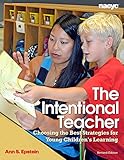
- Epstein, Ann S. (Author)
- English (Publication Language)
- 304 Pages - 08/15/2014 (Publication Date) - The National Association for the Education of Young Children (Publisher)
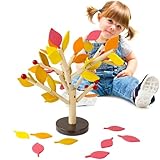
- Carykon tree-shaped wooden blocks
- Material: Made of environmentally friendly wood, no burrs, no peculiar smell, bright colors and can be assembled at will (warm reminder: this product is recommended for children over 3 years old)
- This is a good educational toy for children. It can attract children's attention and improve children's creativity in the process of making. Parents and children can work together to complete this perfect parent-child handmade work
- Novel tree assembling building blocks, this building block tree set can stimulate and enhance children's hands-on ability and creativity. There are many small holes in the trunk to assemble and insert the branches. Children can make trees of any shape they want

- Harms, Thelma (Author)
- English (Publication Language)
- 104 Pages - 11/01/2014 (Publication Date) - Teachers College Press (Publisher)

- PHONEMIC AWARENESS ACTIVITIES: With its comprehensive, spiraled scope and sequence, Guided Phonics + Beyond facilitates an effective, research‑based approach to phonics instruction.
- SMALL GROUP CLASSROOM MUST HAVES: Each two‑part lesson is flexible and can be taught across whole group or small group time. The scripted lesson structure embeds everything a teacher needs to follow the best‑practices of Science of Reading.
- CLASSROOM SUPPLIES FOR TEACHERS ELEMENTARY: Unit 6 features 25 two-part lessons focusing on Long Vowel Patterns. Tara West has been involved in education for 15 years, serving as an early childhood educator, a curriculum writer, and a professional development speaker.
- PRESCHOOL LESSON PLANS: Tara believes in the importance of creating instructional materials and resources that are fun and engaging to students and supporting the teachers who use her materials.
- DEVELOPED BY TARA WEST: Unit 6: Long Vowel Patterns Instructional Materials includes a spiral‑bound Teacher Guide and the Word and Phrase cards needed for each lesson.
Best Early Childhood Education Materials Buying Guide
Before choosing the best early childhood education materials you should consider following options:
1. Communication: You need to ensure that the materials you choose will help children develop their communication skills. Children can learn to read and write, but that does not mean that they are good communicators.
Communication is more than just verbal skills. It involves being able to understand and express themselves through non-verbal means as well. This includes body language, tone of voice, eye contact, and how they dress.
Children need to learn how to communicate with others in a variety of situations, including in the workplace and in their personal lives. They also need to understand the importance of effective communication.
2. Self-awareness and self-management: Children need to understand their strengths, weaknesses, and limitations. They need to learn how to manage their behavior and emotions.
They also need to better understand their environment and how it affects them. This is especially important in the modern workplace, where employees are expected to work in teams.
3. Collaboration and teamwork: Collaboration and teamwork are essential in the modern world. People are often expected to work together on projects in their personal and professional lives.
Children must learn how to work with others in order to succeed. They must also learn how to “play well with others” in order to thrive in the world.
4. Cultural competence: The world is a diverse place, and children must learn how to work and live in a diverse environment. They need to understand the cultural differences of their peers and learn how to interact with them.
What else you should know about early childhood education materials
1. What are some early childhood education materials that are available?
Some early childhood education materials that are available are books, flashcards, games, and toys.
2. How can I select the best early childhood education materials for my child?
The best way to select early childhood education materials for your child is to consult with their teacher or childcare provider. They will be able to give you specific guidance on what materials will be most appropriate and helpful for your child’s individual needs.
3. How do I know if the early childhood education materials I am using are effective?
The best way to know if the early childhood education materials you are using are effective is to ask the children themselves. If the children are engaged and enjoying the activities, then the materials are likely effective. You can also ask the parents for feedback on how their children are doing in school and if they are seeing any improvements at home.
4. What are some tips for using early childhood education materials?
Some tips for using early childhood education materials are to choose materials that are developmentally appropriate, to use a variety of materials, and to be creative in how the materials are used. Developmentally appropriate materials are those that are designed for the age group of the children that will be using them. A variety of materials helps to keep children engaged and provides different opportunities for learning. Being creative in how materials are used helps to make learning more fun and engaging for children.
5. How often should I change early childhood education materials?
The answer to this question depends on the materials in question. Some materials, like books, can be used for many years, while others, like art supplies, may need to be replaced more frequently. Ultimately, it is up to the early childhood education professional to determine how often to change materials, based on the needs of the children in their care.
Conclusion
On the market, there are numerous best early childhood education materials. Hopefully, the list of the top ten best early childhood education materials will save you time researching and deciding on the best one for you.