
To the untrained eye, all glassware is exactly the same. However, even the most carefully curated kits can start to look a bit shabby after a few uses, so it’s important to know how to properly care for your glassware. We’ve researched the best practices for washing science glassware so you can keep your lab running smoothly.
Read on to learn more about the best science glassware washing solutions.
Our Editor’s Best Science Glassware Washing Solutions Reviews
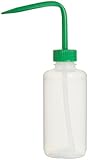
- Narrow-mouth wash bottle used to wash labware and to store washing solutions, such as acetone or deionized water
- LDPE body for flexibility, elasticity, and impact, stress-cracking, and moisture resistance, and is lightweight
- Cylindrical shape for a wide variety of applications that require solution containment
- Polypropylene screw closure with its angled stem and draw tube molded in one piece for leak-proof applications
- Colored cap and spout enable color-coding of washing solutions or coordinating with industry storage codes
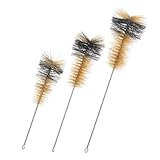
- Comprehensive cleaning: the specially designed brush head reaches every corner of your equipment, providing a thorough and,science laboratory cleaning brushes,tube cleaning brush
- Thorough cleaning: the unique brush head design allows for thorough cleaning of all areas, ensuring no dirt or residue is left behind,vases cleaning brush,bottle wash brushes
- Multipurpose tool: ideal for use in labs, this brush is suitable for a wide range of laboratory cleaning tasks,flask test tube cleaning brush,glass bottle brushes
- Multiuse capability: ideal for labs, this brush is a versatile tool for various laboratory cleaning needs,cleaning brush,tube brush
- Scratchfree bristles: the soft bristles are designed to clean without scratching, preserving the integrity of your laboratory equipment,jars cleaning brush,bottle cleaning brush

- Wide-mouth wash bottle used to wash labware and to store washing solutions, such as acetone or deionized water
- LDPE body for flexibility, elasticity, and impact, stress-cracking, and moisture resistance, and is lightweight
- Round shape used for a wide variety of common applications that require fluid containment
- Colored polypropylene screw closure with its angled stem and draw tube molded in one piece for leak-proof applications
- Hazardous communication label allows for content identification and safety information

- 51 expansion borosilicate glass offers excellent chemical resistance against sodium leaching, a factor common in soda lime glass products
- Tubes are packed in convenient trays for ease of use on bench tops and in drawers
- The 6x50mm size is often referred to as a "Durham tube"; Trays are shrink-wrapped in plastic film, with tubes remaining in constant alignment for protection against in-transit breakage and contamination
- Designed from ASTM Specification E890
- Manufactured from 51 expansion borosilicate glass conforming to USP Type I and ASTM E438, Type I, Class B requirements
Best Science Glassware Washing Solutions Buying Guide
Before choosing the best science glassware washing solution you should consider following options:
1. Water temperature: When you wash glassware and other items, you need to make sure that you use the right water temperature. You should aim to use hot water instead of cold water, as hot water is more effective at getting rid of bacteria.
2. Soap: You should buy a liquid dishwashing detergent for washing the glassware. Do not use bar soap to wash this type of item, as it is not as effective as liquid soap.
3. Detergent: You should use the right amount of detergent when washing this type of item. Do not use too much or too little detergent. Too much detergent will leave behind a film on the glassware, while too little detergent will not get rid of bacteria properly.
4. Rinse well: You should rinse the glassware well after you wash it. This will get rid of any soap residue that is left on the glassware.
5. Dry well: You should dry the glassware well after you wash it. If you do not dry it well, it will leave water spots on your countertops. You can speed up the drying process by putting the glassware on a drying rack or in the dishwasher.
6. Sanitize: If you want to sanitize the glassware, you should wash it in hot water with a sanitizing liquid. This will get rid of any bacteria on the glassware.
7. Disinfect: If you want to disinfect the glassware, you should wash it in hot water with a disinfecting liquid. This will get rid of any bacteria and germs on the glassware.
8. Soak: If you need to soak the glassware, you should put it in a bathtub full of hot water with a liquid dishwashing detergent. You should not soak the glassware in cold water with a bar soap, as this will not get rid of bacteria effectively.
9. Use bleach: You can use bleach to disinfect the glassware, but you should only do this on glassware that is not colored. Bleach will damage the coloring on colored glassware.
10. Rinse well: You should rinse the glassware well after you wash it. This will get rid of any soap residue that is left on the glassware.
11. Dry well: You should dry the glassware well after you wash it. If you do not dry it well, it will leave water spots on your countertops. You can speed up the drying process by putting the glassware on a drying rack or in the dishwasher.
12. Lids: You should not put the lid on the glassware when you wash it. The lid will prevent the water from getting into the glass properly and will leave spots on your countertops.
What else you should know about science glassware washing solutions
1) What is the best science glassware washing solution?
The best science glassware washing solution is a detergent solution.
2) What are the benefits of using a science glassware washing solution?
Science glassware washing solutions are designed to remove tough stains, such as those from laboratory chemicals, without damaging the glass.
3) What are the drawbacks of using a science glassware washing solution?
The drawbacks of using a science glassware washing solution are that it is not very effective at removing oils and it can leave streaks on glassware.
4) How do I choose the right science glassware washing solution for my needs?
You should consider the type of glassware you are using, the type of water you are using, and the type of detergent you are using.
5) How do I properly use a science glassware washing solution?
The recommended way to use a science glassware washing solution is to first add the solution to a clean, empty sink. Next, add your glassware to the sink and allow it to soak for the recommended amount of time. Finally, remove the glassware from the sink and rinse it thoroughly with clean water.
Conclusion
On the market, there are numerous best science glassware washing solutions. Hopefully, the list of the top ten best science glassware washing solutions will save you time researching and deciding on the best one for you.